In brief
This article reads ASML's capacity outlook as a forecast with assumptions rather than a completed result. Public figures can clarify intended manufacturing scale and timing. They do not prove that a future production or delivery target has already been achieved.
ASML's second-quarter release of 15 July 2026 contains unusually specific statements about manufacturing capacity. The company plans to add 30% to its 2026 low-NA EUV capacity of around 65 in 2027 and describes the same percentage increase for its 2026 DUV immersion capacity of around 130. It is investigating a further expansion for 2028. These figures are useful, provided they are read as statements about different periods and different levels of commitment.
The verbs carry evidence
ASML says it plans the 2027 increases. It says it is investigating additional capacity for 2028. Neither verb reports systems delivered to customers. Losing those verbs in a summary can turn a scenario into an apparently established operating fact.
Simple arithmetic suggests that a 30% addition to a reference figure of about 65 would imply capacity in the region of 85, and a 30% addition to about 130 would imply around 169. These are rounded editorial calculations from ASML's approximate reference figures, not validated production targets, reported shipments or precise forecasts. EUV and DUV also describe different systems; the figures should not be combined into one interchangeable count.
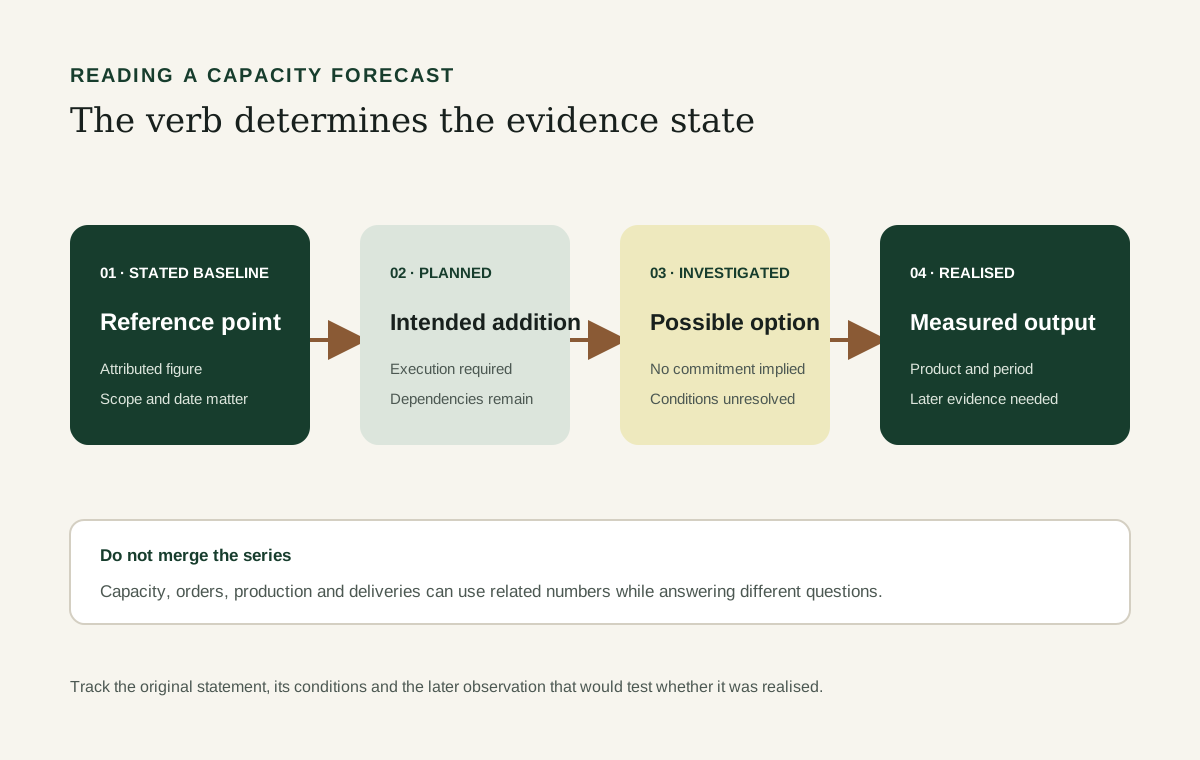
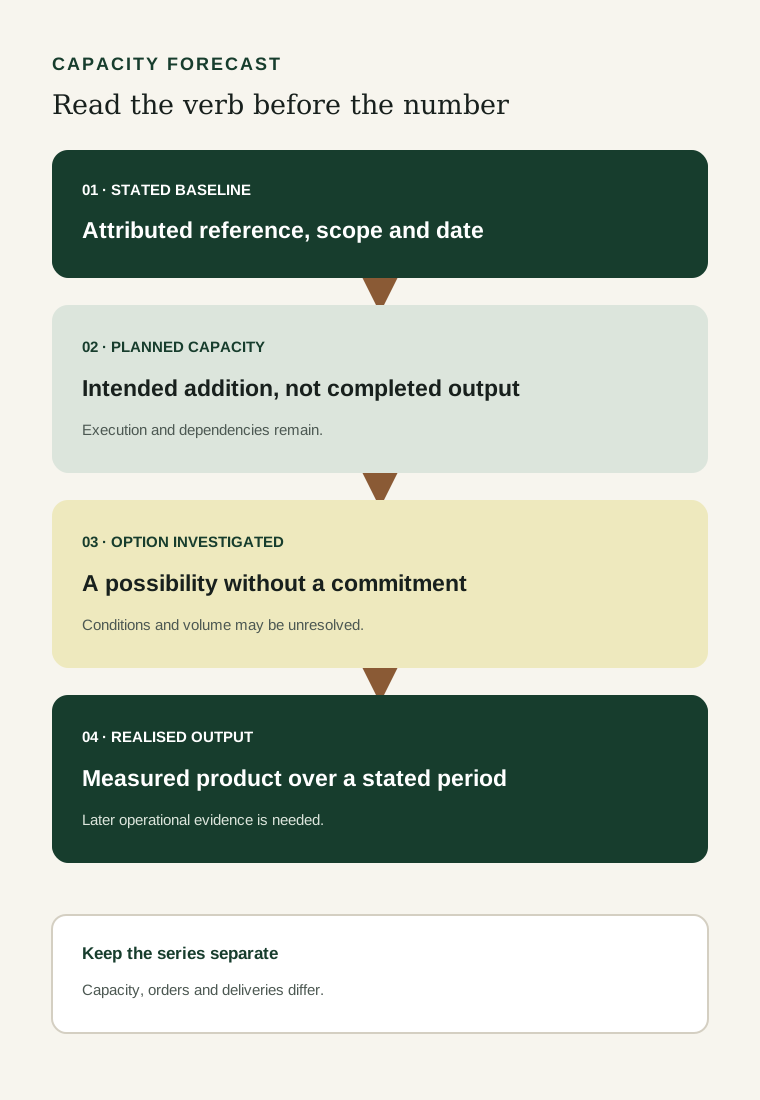
A baseline, a plan, an option and realised output can use similar units while representing different evidence states.
- Stated baseline
- The company identifies the reference against which a change is described.
- Plan or option
- Execution and dependencies remain future conditions, with an option less certain than a plan.
- Realised output
- Actual production or deliveries must be established by later evidence.
Keep capacity, orders and deliveries separate
Capacity describes what a manufacturing organisation may be able to produce under stated conditions. Orders indicate demand subject to contract timing and potential changes. Shipments describe systems delivered during a particular period; revenue recognition can follow its own accounting timing. A strong order intake and customers planning expansions can support a business case for capacity growth without demonstrating that the planned additional output already exists.
For a useful analysis, record the product family, unit and date for every figure. Do not compare annual capacity directly with quarterly bookings. Name the conditions required for any increase, including supply of components, qualified employees and the ability to execute the production plan. ASML's own release discusses uncertainties related to supply-chain capacity and parts availability, among others.
Which question changes your decision?
A supplier may want to know whether demand for its parts might increase in 2027. A chip manufacturer may care when added tool-manufacturing capacity could affect delivery timing. A competitor may ask whether the scale-up is plausible within the available industrial network. The same percentage statement is a starting point for all three questions but a complete answer to none.
Create an evidence line for the original July statement, then a separate line for subsequent updates. Were the plans restated, revised or realised? Is any change visible in product-specific delivery disclosures? If public sources cannot resolve the product split or timing, the analysis should say so explicitly.
There is also a geographic trap. On 8 September 2026, ASML announced a new Eindhoven-area campus, with the first phase expected to be completed in 2029. The full planned 2027 capacity increase cannot simply be assigned to that future first phase. Both announcements signal investment, but their precise operational relationship is not established by the two releases.
A compact scenario table can include statement, required condition and later test. '2027 capacity increase planned' depends on successful execution of the manufacturing and supply plan; a later capacity or delivery update can test the result. 'Further 2028 increase under investigation' has a more tentative status. Avoid assigning it an exact committed volume when the company has not provided one in the cited statement.
Percentages look precise, but their meaning depends on what is being measured. In this example, the 2026 figure is the stated reference, 2027 the planned addition and 2028 a further option under investigation. That distinction leaves useful intelligence about ASML's priorities while keeping future supply separate from realised output. It is a method that applies to almost any industrial expansion announcement.
Internal link: What is industrial competitive intelligence?.
Sources
- ASML reports €9.3 billion total net sales and €2.9 billion net income in Q2 2026ASML. Published 15 July 2026. Accessed 12 October 2026.ASML company release. It supports attribution of the stated capacity outlook and conditions to ASML; a forecast or option under investigation is not realised manufacturing output or delivered systems.
- ASML begins construction of new Eindhoven campus, strengthening its presence in the Brainport regionASML. Published 8 September 2026. Accessed 12 October 2026.ASML company announcement. It supports the stated construction milestone, planned site scale, workplace figures and timing; it does not establish present manufacturing output or the later operational effect of the campus.
Apply this discipline to a live question.
Define the decision, the evidence standard and the uncertainty that matters most.