In brief
This article explains how public-source research can inform a defined industrial decision. It shows why source quality, timing and competing interpretations matter more than the volume of collected material. Public evidence can narrow uncertainty, but it cannot reveal every private plan or operating fact.
A decision discipline, not a data collection exercise
Industrial competitive intelligence is the structured collection and interpretation of lawful information about companies, technologies, capabilities and markets. Its purpose is to improve a decision: whether to enter a market, respond to a competitor, qualify a partner, adjust a product roadmap or test a strategic assumption.
The distinction matters. A large folder of documents is not intelligence. Intelligence connects evidence to a defined question, explains how reliable each source is and shows which conclusions are supported. It also makes uncertainty visible. In technical markets, where product claims are often incomplete and terminology varies between suppliers, that discipline is more valuable than sheer volume.
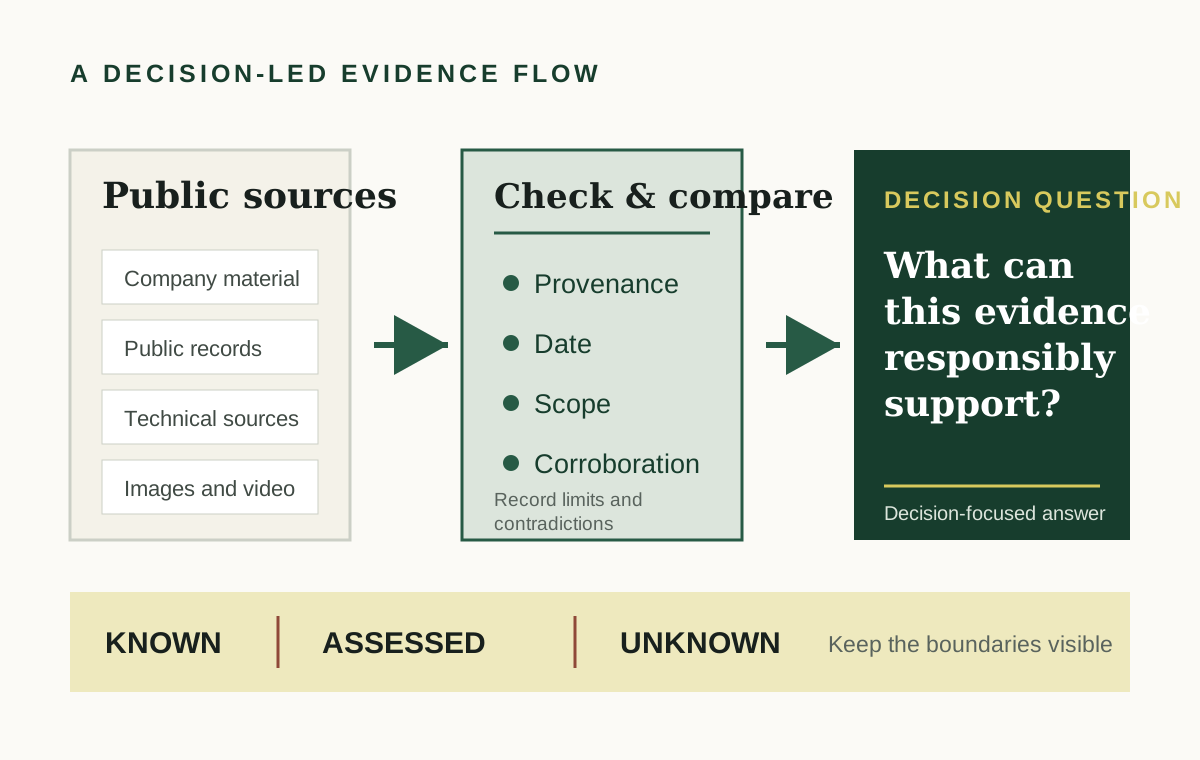
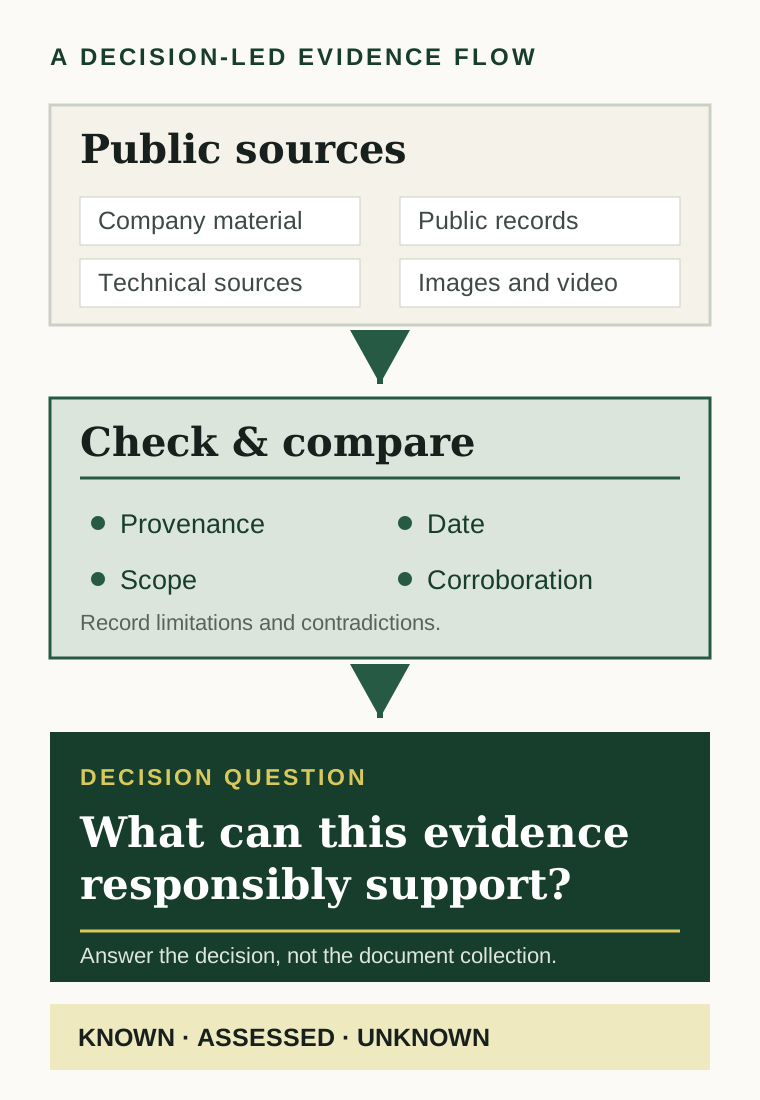
Source material becomes useful intelligence only after it has been checked against the scope and evidential needs of a defined decision.
- Inputs
- Lawfully accessible company, technical, public-record and visual material.
- Checks
- Provenance, date, scope, consistency and independent corroboration.
- Output
- A bounded answer that distinguishes what is known, assessed and still unknown.
What the evidence can include
Useful sources are often distributed across places that were published for different audiences. Company reports may explain strategy. Product literature describes intended capability. Patent publications can show claimed inventions and technical direction. Vacancies indicate skill requirements. Tender notices, permits and certifications can add timing, location or compliance context. Public photographs and video may help test whether a stated capability is physically plausible. [2][3]
No single source should automatically be treated as definitive. Corporate and supplier material is primary evidence of what its publisher claims, not independent proof that the claim is correct. Photographs can lack context and public databases can be incomplete. The analyst’s task is to assess provenance, recency, consistency and motive, then cross-reference the signal against independent material. [4]
- Primary company, regulatory and technical publications
- Patents, certifications, tenders and planning records
- Vacancies, supplier references and trade-fair material
- Publicly published facility, equipment and product imagery
How it differs from market research
Market research often starts with a category and asks how large it is, who buys, and how demand may develop. Industrial competitive intelligence usually starts with a narrower decision and a specific uncertainty. Can this competitor produce at the claimed scale? Which partners appear connected to a programme? Is a new product genuinely available, or still a development signal?
The disciplines overlap, but the intelligence question is usually more evidential and more operational. It may require reading technical drawings, comparing facility changes over time, tracing corporate relationships or reconciling contradictory claims. The result should be usable by strategy, engineering, procurement and commercial teams—not only by a research specialist.
A credible output separates knowledge from judgement
A professional report distinguishes direct observation from interpretation. A planning document may confirm that an extension was permitted. Public imagery may indicate that construction occurred. Job adverts may support an assessment that the company is preparing for greater throughput. None of those sources alone proves current production capacity. [4]
Labelled confidence levels help readers understand this boundary. A confidence label should reflect the quality and completeness of the information base and the rigour of the analysis; it is not a substitute for explaining uncertainty. Moderate or indicative findings can remain useful, but should be treated as questions to test rather than facts to repeat. [4]
When to commission focused intelligence
The work is most valuable when a decision is important, public information is fragmented and the cost of a false assumption is meaningful. A clear brief should state the decision, target, timeframe and evidence standard. It should also state the legal and ethical boundaries: public sources only, no impersonation, no unauthorised access and no use of unlawfully acquired material. [1]
A tightly scoped question generally produces a stronger result than a request to find everything about a company. Start with the uncertainty that could change the decision. The research can then identify what is known, what is likely, what remains unknown and which next question would reduce uncertainty most effectively.
Sources
- SCIP Code of EthicsStrategic Consortium of Intelligence Professionals (SCIP). Accessed 7 October 2026.Professional-association guidance, not legislation. The page does not state a publication or update date.
- Espacenet – patent searchEuropean Patent Office. Accessed 7 October 2026.Describes the official search service and its coverage. A patent document records a filing or claim; it does not by itself prove operating capability. The page does not state a publication or update date.
- About TED: The Online EU Procurement SupplementPublications Office of the European Union. Accessed 7 October 2026.Identifies TED as the online EU public-procurement supplement. The page does not state a publication or update date.
- PHIA Common Analytical StandardsUK Intelligence Analysis profession. Published 24 March 2025. Accessed 7 October 2026.Government analytical guidance used here as a methodological reference; it is not an industrial certification for MelonCactus.
Apply this discipline to a live question.
Define the decision, the evidence standard and the uncertainty that matters most.