In brief
This article examines what public photographs and videos can reveal about industrial facilities and equipment. Visual clues become useful only when their origin, date and context can be tested against other sources. An image cannot by itself establish throughput, utilisation or current production.
Images are evidence, but rarely the whole answer
A public photograph can preserve details that written material omits: the arrangement of a production line, the scale of a clean area, the type of handling equipment, the apparent maturity of a prototype or the relationship between buildings on a site. Video adds sequence and movement. It may show process flow, staffing patterns or how equipment is operated. [3]
These observations can support industrial capability analysis, but an image is not self-explanatory. Date, location, editing, camera angle and publication purpose all affect what can be concluded. A photograph may be current or years old. A machine may be present but not operational. A demonstration unit may not represent serial production.
Begin with provenance and context
Before interpreting the scene, establish where the image came from, when it was published, whether the claimed location is credible and whether earlier versions exist. Corporate websites, trade-fair posts, supplier case studies, recruitment material and public planning records may all contain the same image with different captions. Those differences can be informative. [1]
The surrounding page matters. A supplier may state an installed model and delivery date; that remains a supplier claim until corroborated. A company caption may identify the line or customer programme. A planning document may confirm the building. Preserve the original URL, capture date and relevant context so the evidence trail remains auditable instead of relying on a detached screenshot. [1]
Observable features versus inferred capability
Good analysis states what is directly visible before explaining what it may mean. An image can show the presence of equipment, repeated workstations, marked production zones, ventilation infrastructure, material storage or protective controls. Those are observations. An assessment that the facility can perform a particular process requires additional technical and contextual support. [1]
Hidden specifications should remain hidden. Pixel dimensions do not prove material composition. An external housing does not reveal internal tolerances. A clean appearance does not establish a certified cleanliness class. Image metadata can provide dates, locations or administrative context when present, but it is another item to verify—not proof of authenticity. Visual evidence may narrow possibilities or contradict a claim, but it does not make inaccessible details knowable. [2]
- Describe visible objects, labels and spatial relationships
- Record image date, source and likely publication purpose
- Cross-reference equipment with manuals or supplier literature
- State alternative explanations and unresolved limitations
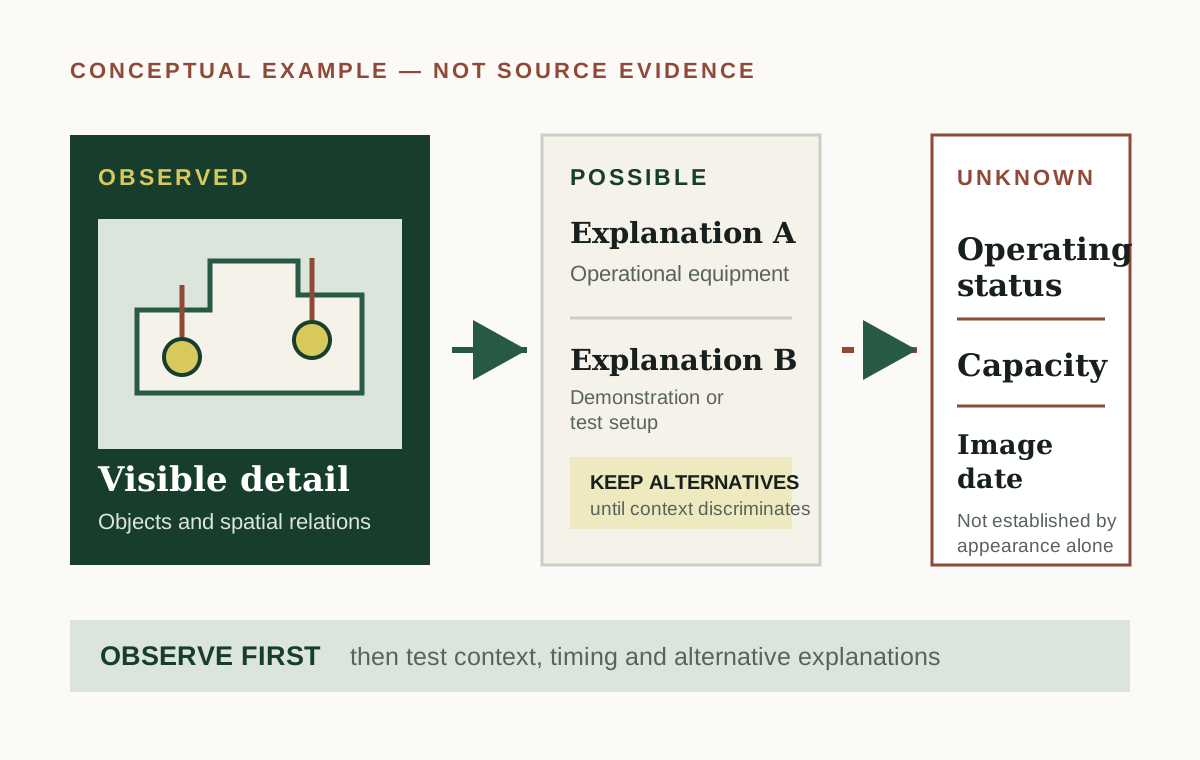
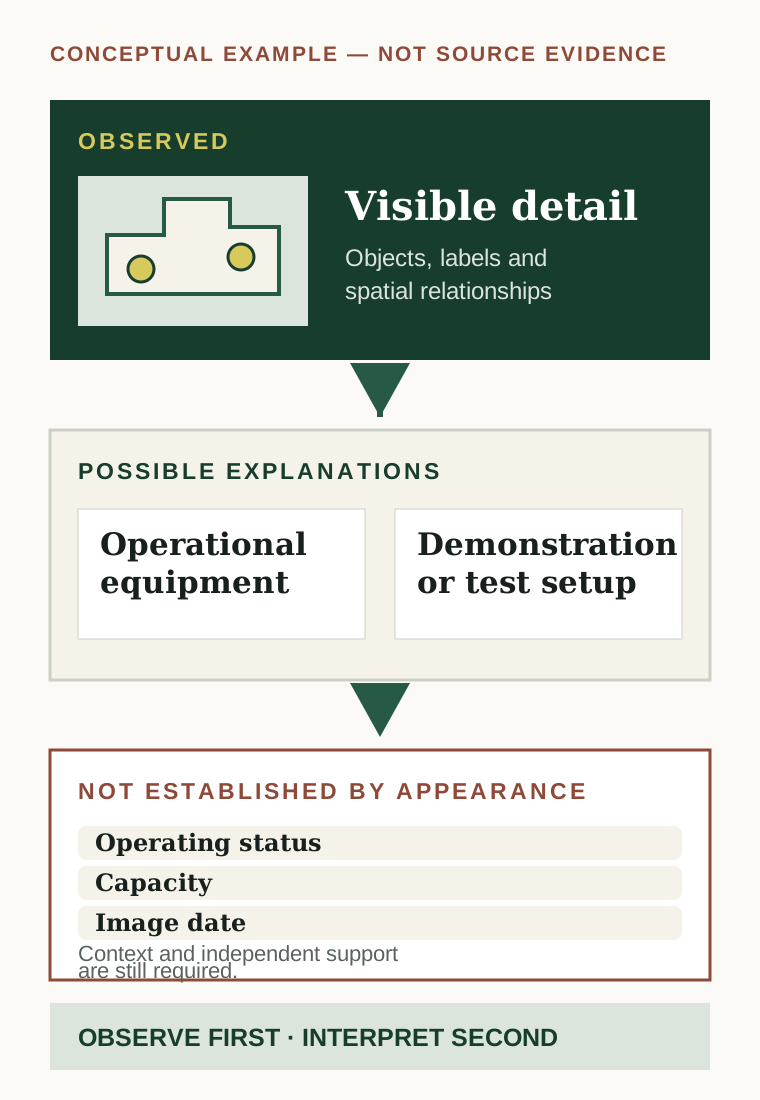
A visible feature can narrow possibilities, but operating status, capacity and timing require contextual and independent support.
- Visible
- Record the object, label or spatial relationship that can actually be seen.
- Possible
- Keep more than one explanation open while context is incomplete.
- Unknown
- Do not infer hidden specifications, current operation or production scale from appearance alone.
Useful analytical comparisons
The strongest visual findings often come from comparison. Images from different dates can indicate construction progress, layout changes or the appearance of new equipment. Several viewpoints can test whether an apparent feature is real or caused by perspective. Supplier material can help identify equipment families, while product and recruitment information may show whether the necessary skills and processes are also present.
Comparison should remain proportionate. Similar-looking machines may have different specifications. A newly fitted production area may still be in commissioning. Absence from an image is not proof of absence from the facility. Each conclusion should reflect the actual evidential strength.
How to report visual findings responsibly
A useful report pairs each significant image observation with its source, assessment, confidence and limitation. Annotated crops can help readers inspect relevant details, provided annotations do not obscure the original evidence. Where the image is insufficient, the report should say so plainly and identify the next public source that could test the point. [1]
Visual analysis is valuable because it adds another evidence stream, not because it bypasses uncertainty. Used alongside technical documents, public records and commercial context, it can reveal inconsistencies, strengthen a capability assessment and help decision-makers ask more precise questions.
Sources
- Berkeley Protocol on Digital Open Source InvestigationsUN Human Rights Office and UC Berkeley Human Rights Center. Published 2022. Accessed 7 October 2026.The protocol concerns human-rights investigations. This article uses only its general principles for identifying, collecting, preserving and analysing digital open-source material.
- IPTC Photo Metadata StandardInternational Press Telecommunications Council. Published November 2025. Accessed 7 October 2026.The standard defines descriptive, rights and administrative metadata fields. Metadata can provide context, but its presence is not proof that an image or its claims are authentic.
- Security-Minded Communications – Guidance for Remote and Rural LocationsUK National Protective Security Authority. Accessed 7 October 2026.Protective-security guidance that specifically identifies screens, noticeboards, staff passes and contractor case studies as material to review. The page does not state a publication or update date.
Apply this discipline to a live question.
Define the decision, the evidence standard and the uncertainty that matters most.