In brief
ASML's announced Eindhoven campus illustrates the difference between construction, intended capacity and realised production. The company has reported a construction start and phased plans, not a measured increase in output from the new site. Later operational evidence is needed before drawing conclusions about delivered capacity.
A manufacturer announces a new industrial site. The press release includes floor area, future workplaces and a reference to additional manufacturing capacity. For a supplier or a competitor, the announcement matters. Yet the most useful question may be the least prominent: which capability exists now, and which is still proposed?
ASML's announcement on 8 September 2026 makes a useful case. The company reported the start of construction at Brainport Industries Campus North. It described a project to be developed in phases, eventually covering approximately 350,000 square metres with potential room for up to 20,000 workplaces. It also stated that the campus would add manufacturing capacity to support future growth. Those are substantial disclosures about an investment programme; the ultimate number of workplaces is not a measurement of today's manufacturing output.
Four meanings of capacity
An industrial site can offer physical space. A process can have a designed capacity. A workforce can staff and maintain it. Actual, sustained production requires all those elements to function together. Treating the figures as interchangeable turns a useful announcement into an unreliable forecast.
ASML expects the first phase to be completed in 2029 and says it will accommodate at least 3,000 employees. According to the company, most of these workplaces are intended for teams moving from existing ASML locations. This detail matters: 3,000 future workplaces should not be presented as 3,000 net new jobs. Nor can construction starting in 2026 establish how many systems a future campus will produce.
The company also describes a proposed flow factory for TWINSCAN production. ASML says the operating model is intended to improve material and work flow, allowing faster and larger-scale module production and installation. This indicates the direction of its manufacturing design. Measured improvements in throughput, lead times or delivered systems would require different evidence.
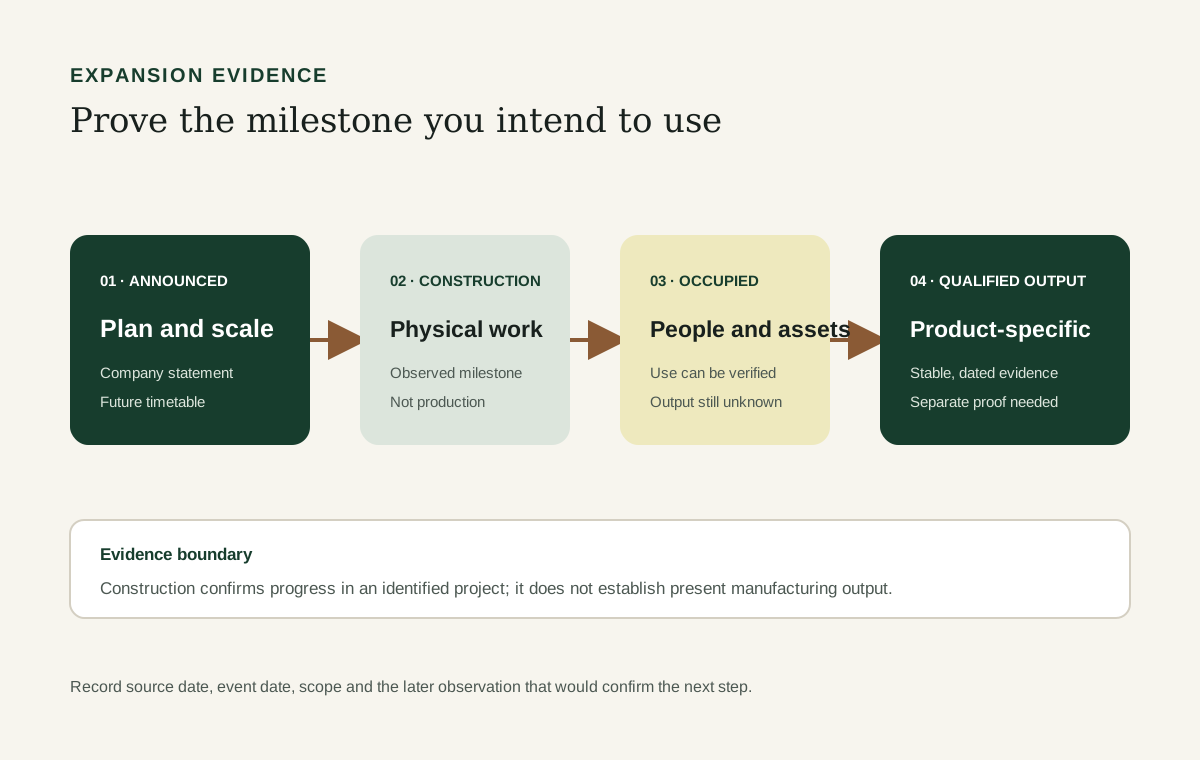
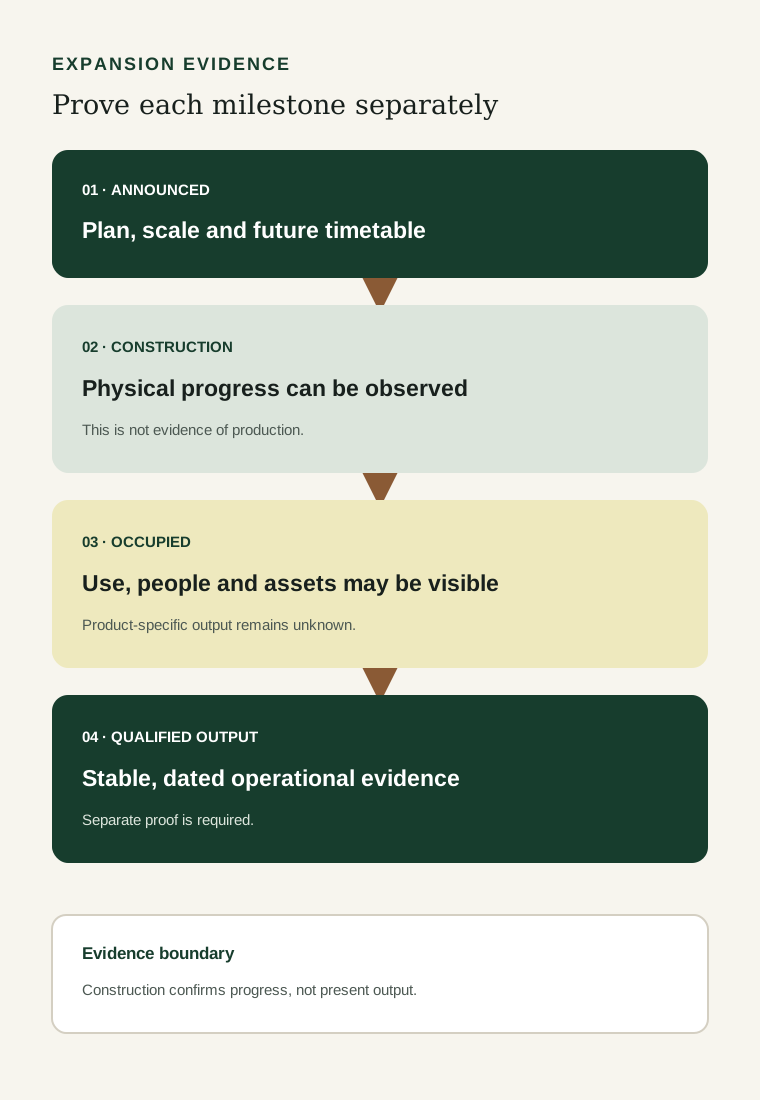
Each later operational claim needs evidence for that specific milestone; planned scale cannot be silently converted into current production.
- Announced
- The company has stated an intention, scale and timetable.
- Observed milestone
- Construction or occupancy can be verified without assuming production.
- Still to establish
- Qualification, sustained output and product-specific effect require later evidence.
What the construction milestone establishes
A groundbreaking is stronger evidence than an early expression of interest. ASML has publicly identified the location, described the intended use of the first phase and marked the start of the project. The evidence can be separated into three classes:
- Reported milestone: the company has announced the construction start and its first-phase plan.
- Future objective: eventual site size, possible workplaces and the expected benefits of the production model.
- Not established here: output by product line, net additions to the workforce and the pace of operational ramp-up.
A useful evidence log records both the publication date and the date on which a future event is expected. Otherwise a sentence written in 2026 about a phase due in 2029 can appear in a presentation as 'new production capacity in 2026'. The source may be authentic while the conclusion is wrong.
Later site and company updates can test whether the phases proceed as planned. Public planning records might establish the permitted footprint; dated imagery might show construction progress; vacancies might indicate staffing needs. Each supports a narrower statement than a claim about current system output. Even the move of a logistics or manufacturing team may improve flow without establishing that a new production line has reached its design rate.
Start with the decision
A supplier deciding whether to invest in additional equipment needs to know when the relevant operation will move and whether procurement is likely to change. Maximum campus floor area is a weak substitute. A strategy team tracking ASML's long-term regional presence can draw value from the verified construction milestone without estimating system output at all. The same announcement supports different decisions at different levels of certainty.
Our conclusion is deliberately narrow. The announcement is strong evidence of ASML's investment direction and a milestone in an identified project. The operational effect of additional capacity should be assessed against later, product-specific evidence. That distinction makes public information useful without silently converting future potential into current performance.
Internal link: How we assess evidence and uncertainty.
Sources
- ASML begins construction of new Eindhoven campus, strengthening its presence in the Brainport regionASML. Published 8 September 2026. Accessed 12 October 2026.ASML company announcement. It supports the stated construction milestone, planned site scale, workplace figures and timing; it does not establish present manufacturing output or the later operational effect of the campus.
Apply this discipline to a live question.
Define the decision, the evidence standard and the uncertainty that matters most.